When your operation needs a properly scoped solution
Welding fumes form close to the operator, and their movement depends on the welding process, air currents and the distance from a capture hood. General factory ventilation cannot always control exposure in the breathing zone. We help workshops consider dedicated extraction arrangements for welding stations and fabrication areas.
What we review on site
Our discussion starts with the welding processes, number and position of stations, workpiece sizes and whether the operators move between locations. We consider suitable local capture arrangements, flexible arms where appropriate, duct routing and filtration requirements. The system must allow practical welding access without leaving the extraction point too far from the work.
How we approach the work
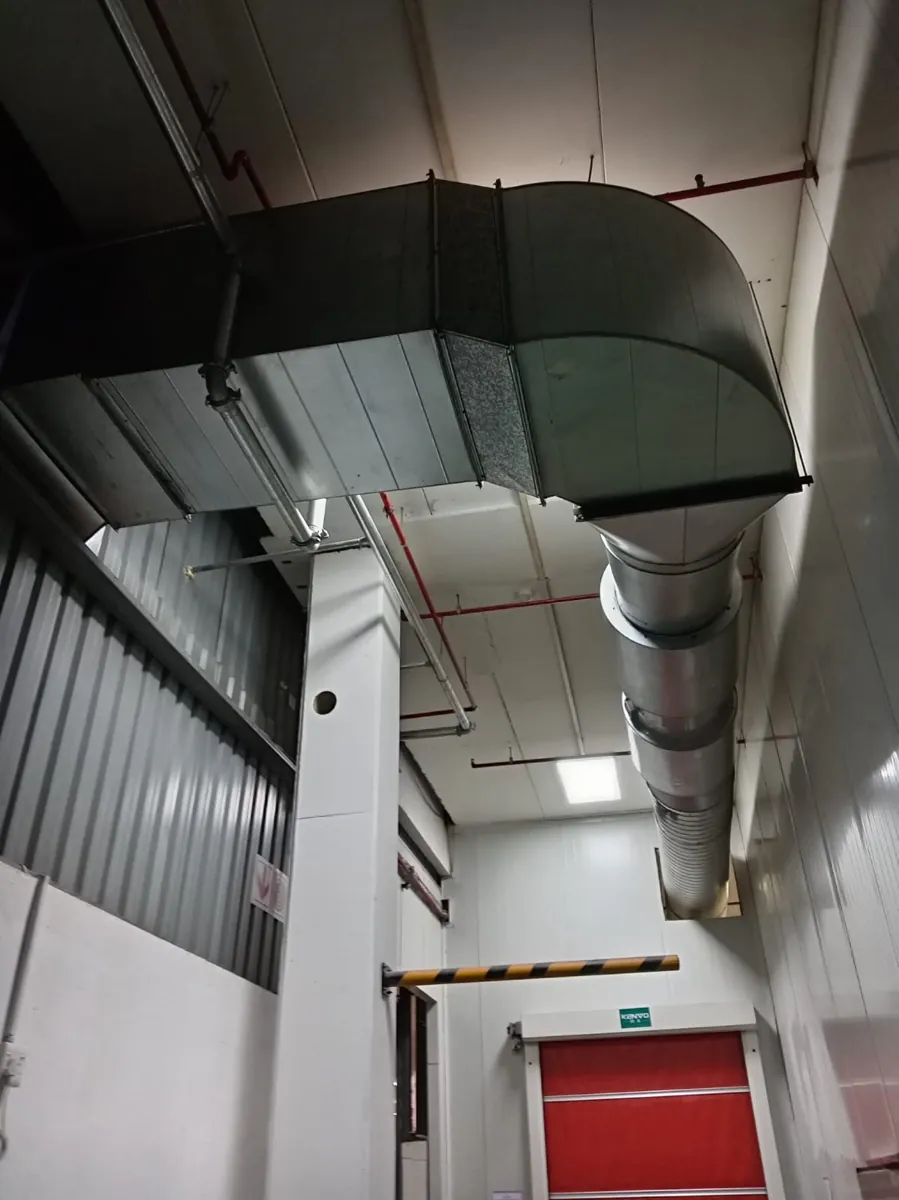
Installation scope can include capture equipment integration, extraction fans, ductwork and a collector selected for the actual process. Existing installations may need modifications when welding booths or workstations are rearranged. We also discuss maintenance access and safe handling of collected material as part of the job brief.
Technical suitability and safe operation
Welding fumes may contain hazardous substances, and some processes have specific fire risks. Effective control must be assessed against the actual process and applicable safety requirements; fitting a fan is not a substitute for a workplace exposure assessment.
Information that helps us prepare your quotation
Share the welding methods, number of bays, workshop layout, material types and current extraction arrangement. Photos of the work positions help us discuss capture options before a site visit.
Station layout changes everything
A hood serving a fixed bench may not suit large or frequently moved workpieces. Flexible workstations need capture methods compatible with how welding actually occurs.
Equipment and operating considerations
Welding fume extraction must consider process, material and welder movement. A fixed arm may work well at a bench but be impractical for a large fabrication assembly; an enclosure or different pickup could be needed. We discuss capture distance, exhaust routing and whether a filter system can handle the actual fumes. Some welding contaminants require specialist exposure assessment and stringent controls. Workshop dimensions, welding methods and the position of other staff guide the initial enquiry.
Planning the project with your operations team
Start with your site and equipment details
Operating requirements and practical checks
Effective welding fume capture depends on keeping the pickup near the arc while leaving space for the welder to work safely. A flexible arm that is routinely moved away from the weld may provide little useful capture regardless of fan capacity. We discuss welding station layout, fume characteristics and cross-draughts before designing ducting. Appropriate occupational exposure evaluation is required, particularly with coated metals or changing consumables.
Maintenance provisions should allow capture arms, flexible connectors and filters to be inspected without placing technicians in awkward positions near welding equipment.