
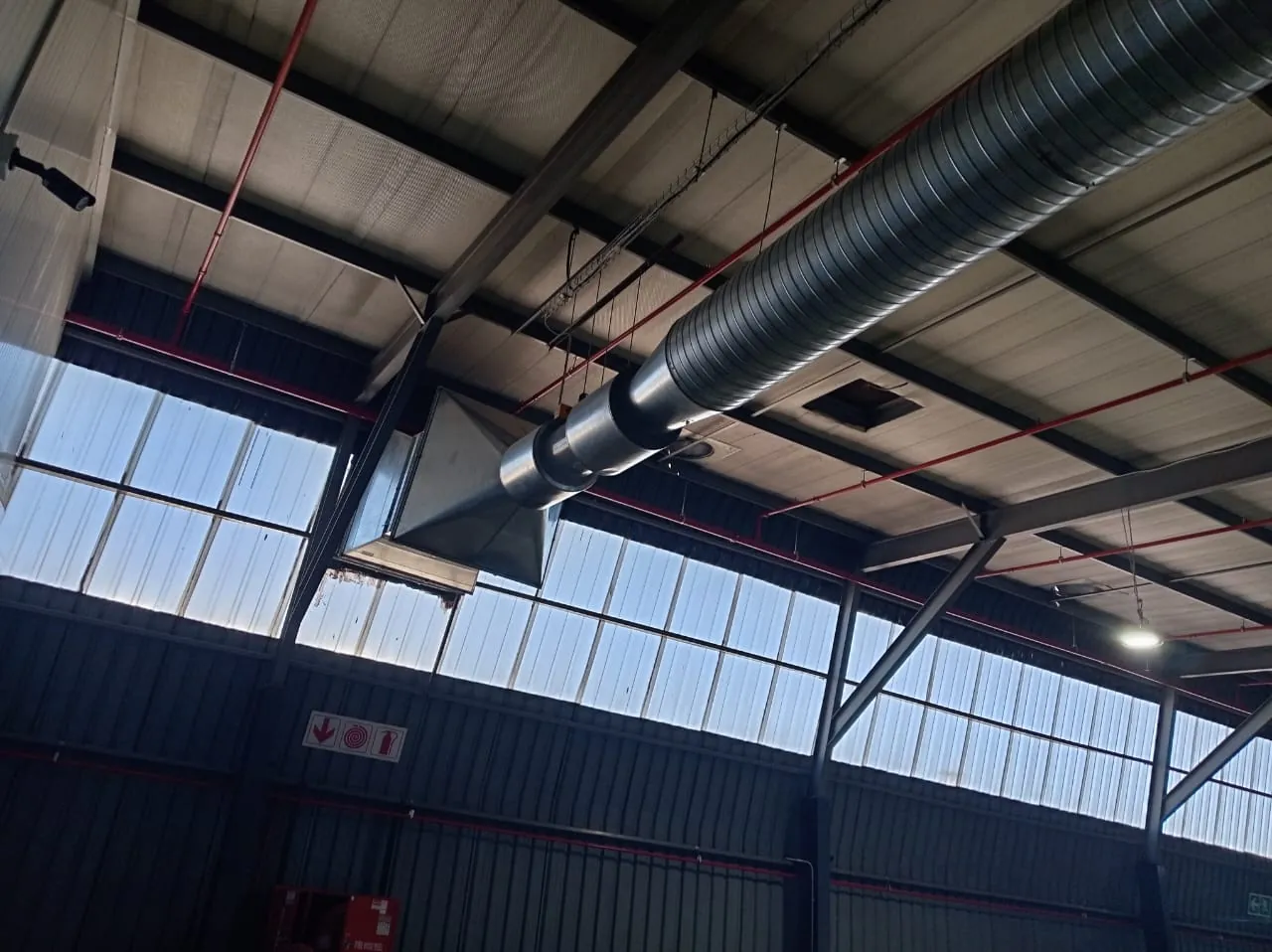
Extraction at the cutting table
Laser cutting creates process fumes and particulate close to the kerf, with loads varying by material, thickness and cutting time. Tables and enclosures have different extraction provisions and manufacturers may prescribe airflow ranges. We begin with the machine model and existing extraction interface rather than proposing a collector based only on the floor area.
Ductwork and collector integration
Under-table zones, duct resistance, filter protection and fan placement can affect extraction consistency throughout a cutting cycle. Material changes may alter particulate characteristics, and some cutting applications produce sticky or difficult-to-filter residues. Access for cleaning and filter exchange should be considered before ductwork is installed behind adjacent machines.
Safety and operating requirements
Laser cutting some coated or engineered materials can produce hazardous fumes requiring particular treatment and controls. Machine manufacturer requirements, combustible-dust potential and occupational exposure assessments must guide final specification. We separate routine dust collector fabrication from specialized hazardous-emission treatment that may need external technical expertise.
Request a site-based quotation
Equipment and operating considerations
Laser cutting can produce fine particulate and process fumes whose composition depends on the material being cut. We discuss the machine enclosure and exhaust port, filtration requirements and safe discharge before considering additional fan capacity. A system suitable for mild steel may not be appropriate for every coated or composite sheet. Filter loading and airflow monitoring can help identify when capture deteriorates. We need machine information, material types and operating hours to define a suitable extraction review.
Speak to our industrial projects team
Request an industrial extraction assessment
Technical decisions that affect the result
Laser processing can release fine particulate and process fumes near the cutting head, with the contaminant changing as the material or coating changes. Effective capture depends on the machine enclosure, extraction port and filtration arrangement rather than solely on room airflow. We consider the machine's extraction interface and any manufacturer specifications before proposing alterations.
A quotation should identify the laser type, metals or other products cut, operating schedule and evidence of smoke escaping from the enclosure. Potentially toxic fumes, combustible particles or process gases require competent safety assessment. Collector media, cleaning access and safe disposal cannot be assumed from the outward appearance of the existing filter cabinet.
Operating requirements and practical checks
An enclosure designed for laser processing can leak fumes if extraction is interrupted when doors open or the table moves. We would confirm the machine's intended airflow connection and consider how a collector will respond to varying cutting materials. Metal fumes and fine particulate can create different filtration and safety requirements. The work scope should include a way to check capture at normal production settings rather than only at no-load fan start-up.