
Capture points and collection hoods
Capture arrangements should suit the dust-generating operation. Equipment position, operator movement and airflow around a machine can affect how well the material is drawn into the extraction system.
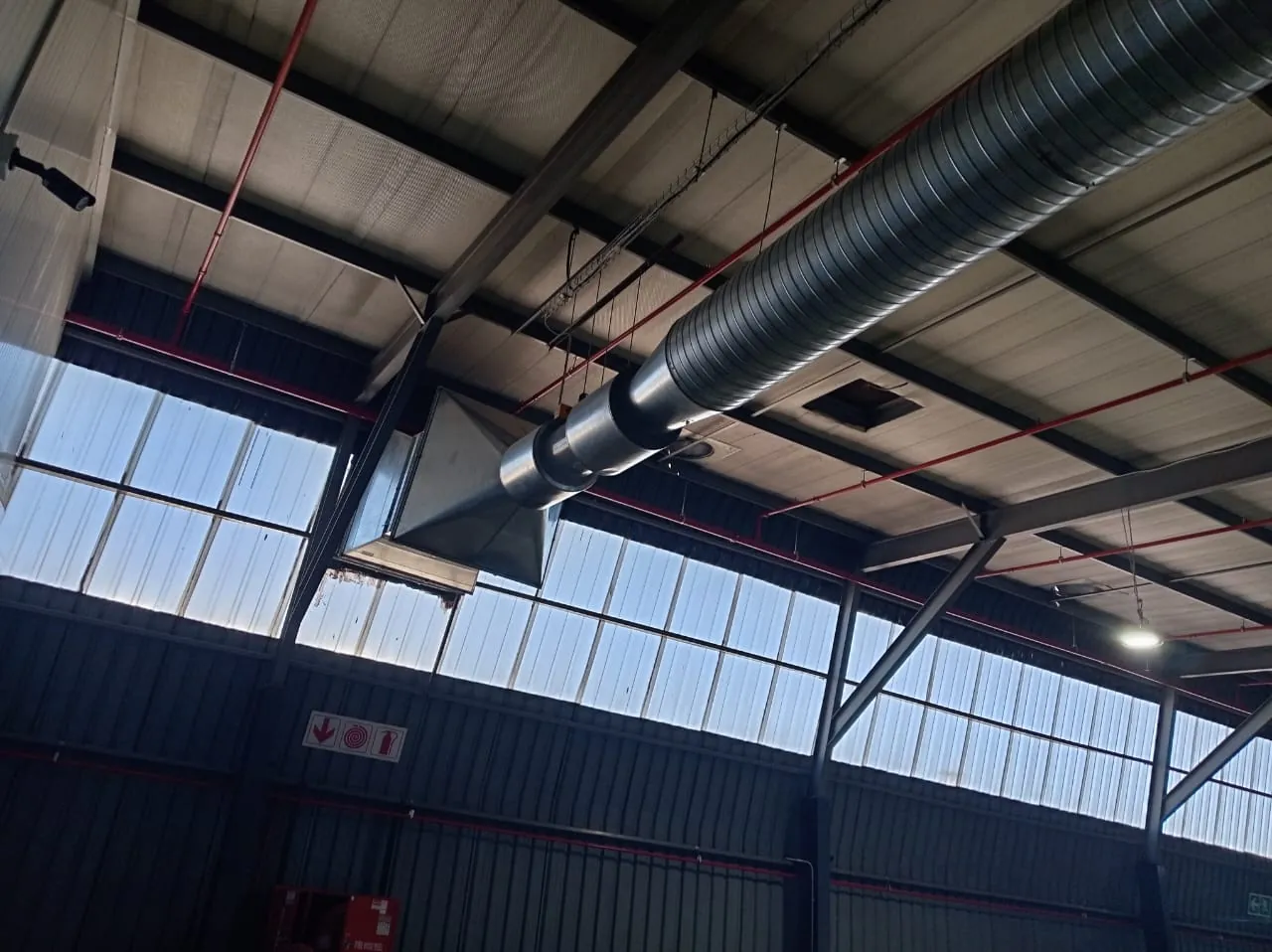
We manufacture dust collectors in-house and plan equipment around the materials, processes, airflow and site conditions of industrial facilities.
Tell us about the dust source, equipment, existing extraction or planned fabrication work. We can assess the next steps for your facility.
12 Pomona Road, Pomona, Kempton Park, 1619
Complete the details below or send them directly through WhatsApp.
We manufacture industrial dust collectors in-house for production environments that need airborne dust captured and collected at source. A collector is only one part of the extraction system. Effective performance depends on what the process releases, how material is captured, the airflow available at individual pick-up points and the resistance created by ductwork, filters and other equipment.
For a manufacturing enquiry, we begin by understanding the process and material being handled. Dry, coarse particulate, fine airborne dust and dust generated at several machines may each demand a different approach. We discuss expected duty, operating schedule, collection locations, existing fan arrangements, available plant space and the required cleaning or collection method before a configuration is finalized.
Our manufacturing scope is defined against agreed specifications. We can discuss the collector enclosure, relevant filtration approach, inlet and outlet connections, dust discharge arrangement, inspection access and integration with associated fans and ductwork. Where a project needs specialist engineering, hazardous-area equipment, testing or a particular certification, these requirements must be identified before a quotation is agreed.
Even a well-fabricated collector will struggle if capture hoods are too far from the dust source, ducts are badly sized or filters are inaccessible for maintenance. We consider the collector's intended position, duct entry, supporting structure, access clearances and servicing needs alongside the equipment itself. This is particularly important in factories already operating with machinery, overhead services and limited floor space.
New-system enquiries can start with a process description, machine list or available layout drawings. For existing systems, photographs of the collector, fan, duct route and pick-up points are useful. Information about current airflow problems, filter condition and production schedules can help identify what requires inspection.
Industrial dust collection equipment can lose performance for several reasons. Blocked or damaged filters restrict airflow. Leaks in collector housings or duct joints reduce useful suction. Mechanical or motor issues may affect fan output, while poorly positioned collection points leave dust escaping into the working area. Our repair enquiries cover these and other reported symptoms, with the actual cause established through assessment rather than guesswork.
Maintenance arrangements should reflect the duty and condition of the system. Relevant tasks may include checking filter elements and seals, inspecting accessible ducts, reviewing fan and motor condition, examining dust discharge points and identifying accumulation that needs controlled removal. Replacement components and maintenance intervals depend on equipment type and manufacturer guidance.
A dust collector is selected around the material and the process, not simply the available floor space. We establish the number of pickup points, the material loading, operating hours, discharge requirements and the route available for extraction ductwork. Filter accessibility, maintenance clearances and the location of the fan affect the installed arrangement. The final layout should allow operators to inspect seals, remove collected material and change filters without dismantling surrounding plant.
Our in-house manufacturing capability supports discussion of collector housings, inlets, hoppers, access doors and compatible duct connections as part of a coordinated system. The scope must specify which equipment will be fabricated, supplied, installed and commissioned; electrical controls and any specialist protective equipment should be identified separately. A proposed collector also needs an agreed location for discharge and adequate structural support.
Provide material and process details, operating schedule, approximate number of pickup points, existing drawings if available, and photographs of the intended collector position. For an existing system replacement, send collector and fan nameplate details and describe what is not working. This gives us a sound basis for scoping the system before issuing a manufacturing quotation.
We consider the connected parts of an extraction arrangement when discussing manufacturing and installation work.
Capture arrangements should suit the dust-generating operation. Equipment position, operator movement and airflow around a machine can affect how well the material is drawn into the extraction system.
Routing, bends, branches, air velocity and available access all influence system performance. Connections must be suited to the material, operational duty and layout of the facility.
The fan must be considered against system pressure losses and required airflow. Filter selection and cleaning arrangements also influence equipment size, operating resistance and future maintenance needs.
Collected material needs an appropriate containment or discharge arrangement. Filter removal clearance, safe access and the ability to inspect serviceable components matter throughout the equipment's working life.
Industrial extraction routes regularly share space with lighting, piping, cable trays, roof beams and moving equipment. New collector and duct installations need to account for these constraints, including safe access for lifting, connection and subsequent maintenance.
We discuss the intended installation sequence and site operating restrictions before work is planned. Where shutdowns, permits, specialist lifting or electrical isolation are required, these must form part of the project arrangements.
Not every material can be handled using the same equipment or filtration setup.
Fine powders, conductive materials, potentially combustible dust, toxic substances and hot process emissions can introduce significant hazards. Such applications may require a formal dust-hazard or process risk assessment, suitable protective equipment and specialist engineering controls. We will not describe a general-purpose collector as explosion-safe or suitable for hazardous dust unless the design and evidence support that claim.
Clients should identify the materials involved and disclose relevant safety data, process temperatures, moisture content and known hazards during the initial consultation. If a system requires independent engineering approval, statutory inspection or specialist equipment, those requirements must be agreed as part of the project scope.
If operators report weak extraction or heavy dust escaping around a machine, the issue may lie with the collector, filters, fan, duct network or capture arrangement. Increasing fan speed or replacing filters without understanding the cause can be ineffective and, on some processes, unsafe. We recommend identifying the fault and applicable hazards before changing equipment.
Good initial information makes it easier to establish whether drawings, a site assessment or further technical measurements are needed.
Describe the machines, material, process steps and whether extraction is needed at one location or multiple points.
Provide site location, available floor space, building height, existing ductwork, production hours and any known hazards.
Let us know whether you need a new collector, replacement equipment, an extension, repairs or an ongoing maintenance arrangement.
Tell us about the site and application. We can discuss the scope and appropriate next step.
Review our collector fabrication, filtration, repair and installation capabilities before sending an equipment specification.
We manufacture and support dust collection equipment through fabrication, installation, servicing, filtration and system upgrades.
Our base is in Pomona, Kempton Park. We manufacture dust collectors in-house and work with industrial and commercial customers on new systems, repairs and maintenance. Find out how we scope work around operating environments and site requirements.