
Equipment requirements and operating conditions
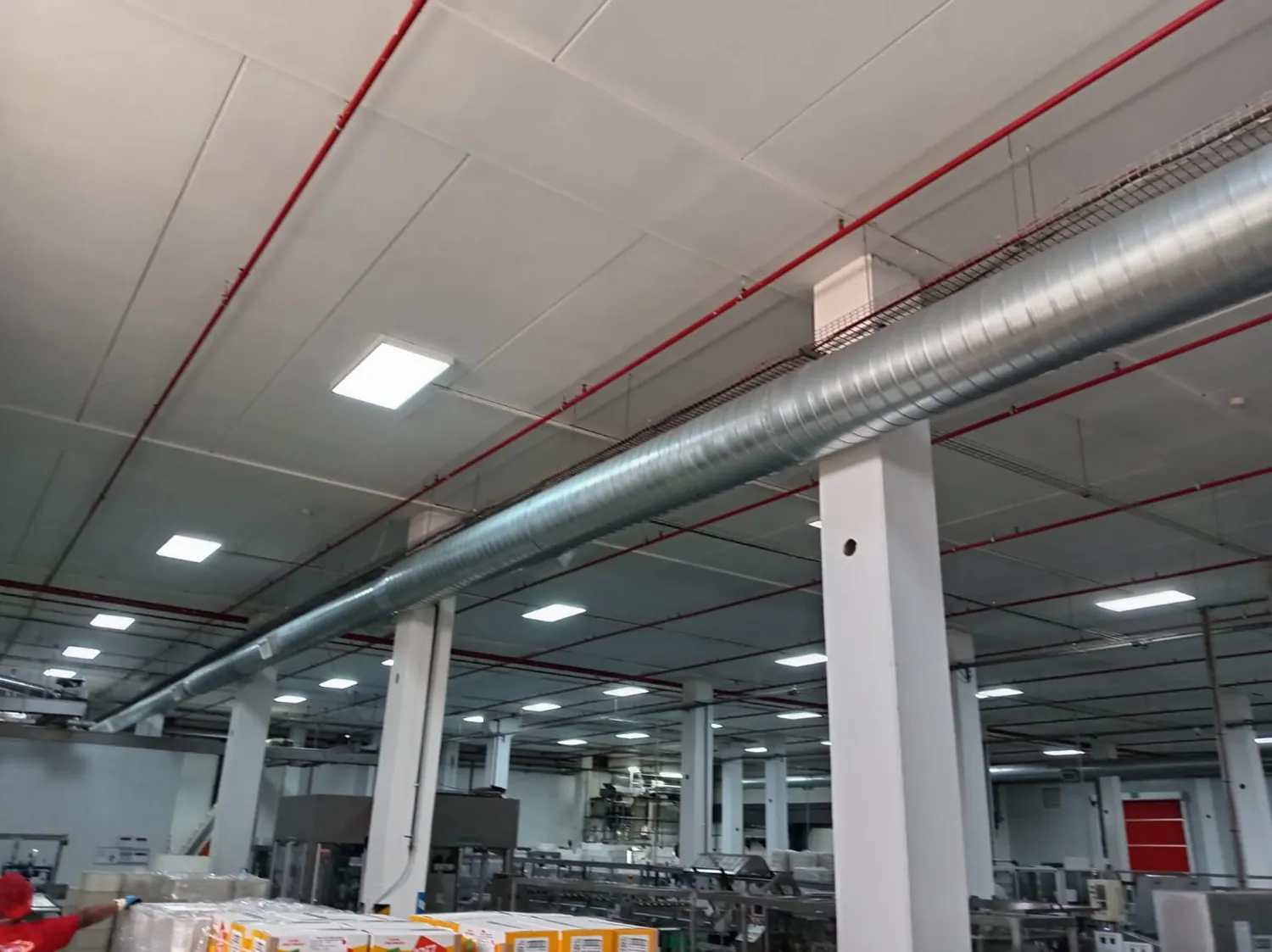
Extraction ductwork must connect machines, hoods and collectors while maintaining the intended transport conditions. We fabricate duct sections and fittings for dust collection projects, considering process routing and the mechanical interfaces at each connection. The correct route helps preserve machine access and supports maintenance rather than obstructing daily operations.
How we scope the work
Duct diameter and material are not decisions to make from visual appearance. Dust type, expected flow, abrasion, pressure loss and whether material might settle all influence specification. Bends, branches, transitions and cleanout points also matter, particularly where a plant runs more than one dust-producing process.
Manufacturing, installation or service approach
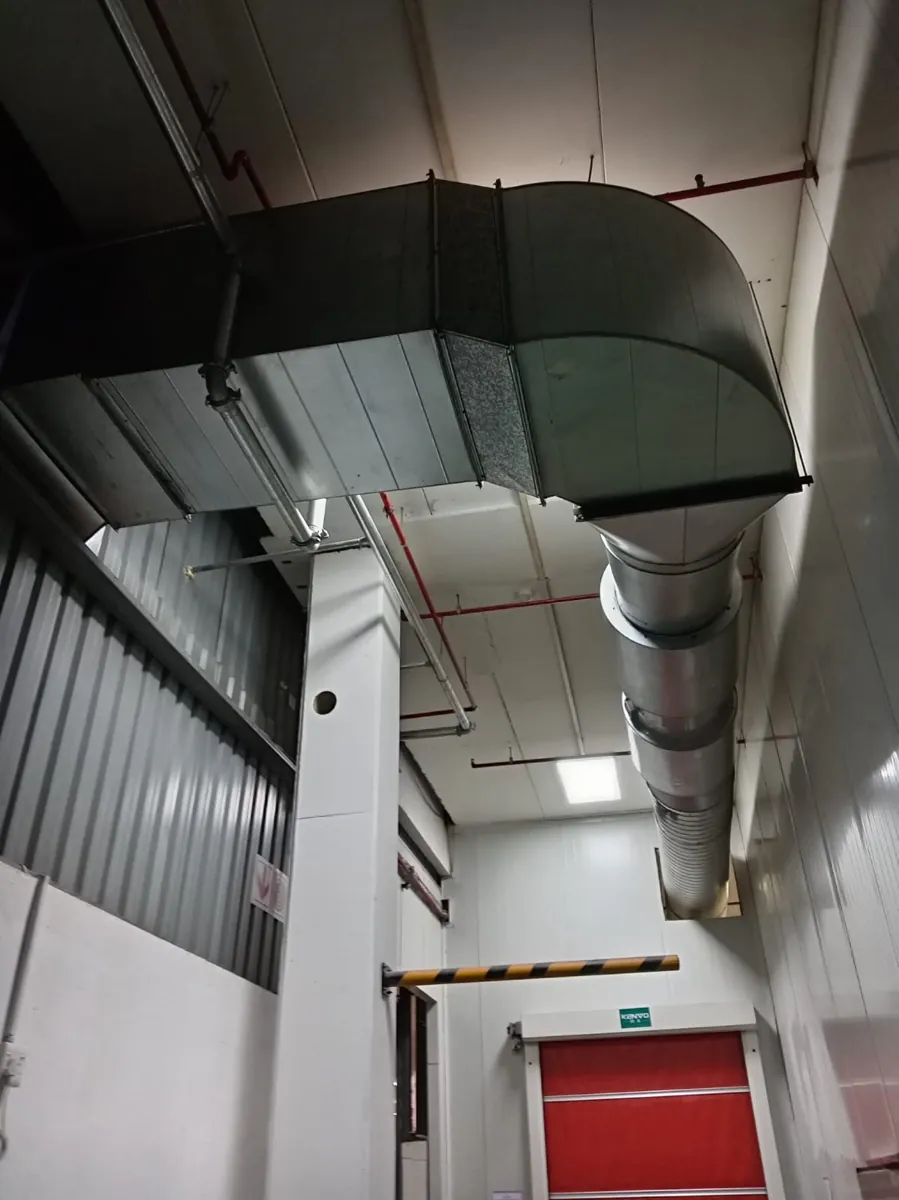
Fabrication scope can include straight sections, shaped transitions, branch pieces and replacement connections to fan or collector equipment. At an existing site, we review support arrangements and whether alterations to one branch could change extraction at other machines. Plant drawings are useful, but physical measurement is often needed before final cutting.
Technical safeguards and limitations
Certain dusts can create fire, explosion or other health hazards within ducting, and their handling may require specialized engineering and risk controls. Ordinary sheet-metal ductwork must not be assumed suitable for every abrasive, corrosive or combustible process. Those properties should be identified before quotation.
What to provide for a quotation
Please share the equipment arrangement, site photographs, approximate routing, operating material and any prescribed duct sizes or specifications. We will discuss whether the request is for fabricated supply only or a complete installation, and where site measurement or specialist input is needed.
Discuss the scope with our technical team
Request a project quotation
Fabricating for fit and maintainability
Ductwork fabrication should follow verified site measurements and the intended extraction duty. Off-the-shelf sections may not accommodate plant columns, existing services or maintenance access. We discuss required transitions, branch takeoffs, flanges and sections that may need removal during equipment service.
Material movement through the network
Particulate can settle where velocity falls, particularly at poorly arranged transitions and dead ends. Abrasive dust may also accelerate wear at bends and changes in direction. These concerns influence the fabrication plan and should be considered with fan and collector selection rather than after installation.
Fabrication enquiry checklist
Send drawings or clear photographs, material being extracted, duct sizes where known, approximate route lengths and the location of machinery. For replacements, identify recurring wear or blockage points so the new sections address the operating problem instead of reproducing it.
Equipment and operating considerations
Fabricating dust extraction ductwork involves balancing material transport velocity with pressure loss, service access and wear. Oversized runs can allow heavy material to settle, while unnecessarily small ducting adds resistance and energy demand. We look at branch entry angles, abrasion at elbows and the need for removable cleanout sections. The completed sections must connect to actual site dimensions and supported equipment interfaces. Metal thickness, joining methods and supports follow the agreed duty rather than one universal duct specification.