
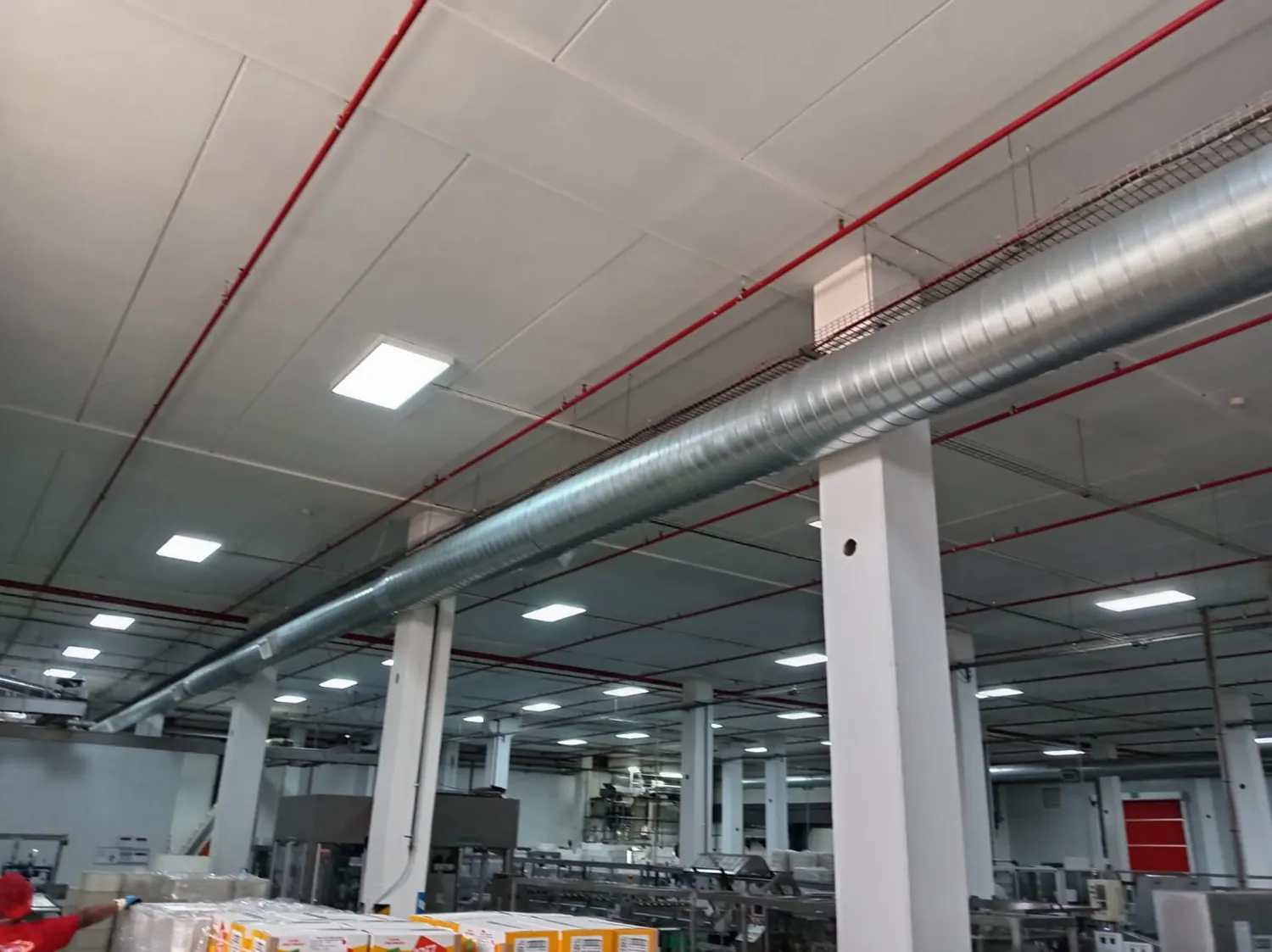
Timber cutting and sanding
Circular saws, panel saws, CNC routers, edge banders and sanders produce very different chip and fine-dust loads. A shared collector has to accommodate which machines operate together, the nature of the waste and the amount of duct resistance. We discuss extraction at the machine connection rather than treating airborne dust throughout the building as the starting point. Fine sanding dust cannot be managed on the same assumptions as bulky planer shavings.
Machinery extraction connections
Duct drops, blast gates, flexible connections and extraction hoods need to suit the movement and operating clearances of each woodworking machine. Long duct runs, inappropriate bends and partially closed branches can reduce capture. We consider how waste reaches the collector and how operators empty bins or bags without transferring dust back into the working area.
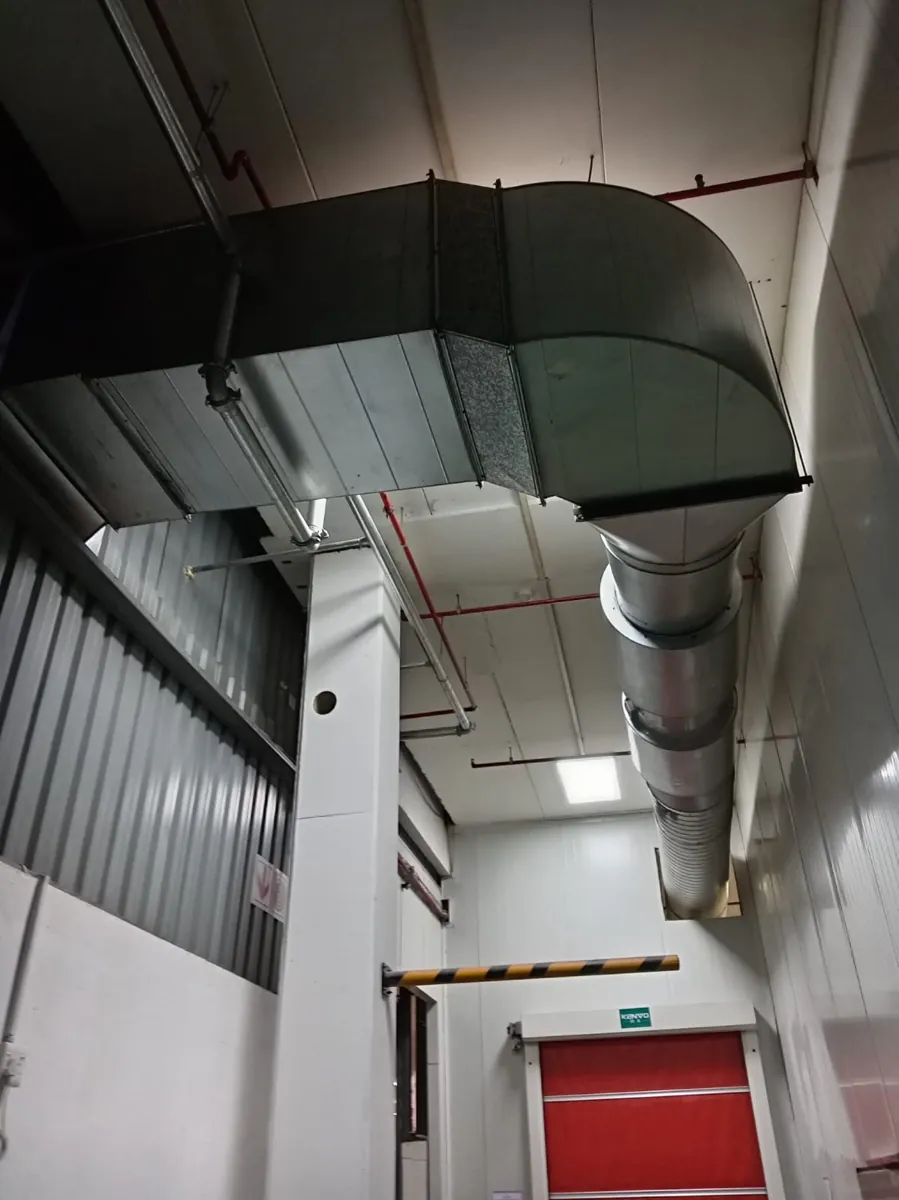
Collector construction and safety
A cyclone pre-separator, suitable filtration stage and fabricated support arrangement may be considered according to dust characteristics and duty. Combustible wood dust requires a competent fire and explosion risk assessment before equipment selection, duct routing or recirculation is finalized. We will not present a general-purpose collector as automatically safe for every timber-processing environment.
Request a site-based quotation
Equipment and operating considerations
Production woodworking plants often have multiple machines discharging into a shared collector. We check whether dust pickup remains effective as branch combinations change through a shift. Dust deposits in duct elbows can indicate transport problems rather than insufficient collector capacity alone. The collector location needs room for safe emptying and filter access. Fine wood dust may be combustible, so protective measures require competent assessment before selection. A plant layout, machine list and current waste-handling method support accurate scoping.
Speak to our industrial projects team
Request an industrial extraction assessment
Technical decisions that affect the result
Dust collection in a woodworking factory must serve active machines, not just the room as a whole. Saws, planers and sanding stations release different chip sizes and dust loads, so the duct and collector should account for simultaneous operation and material transport. We review branch routes, the location of pickup hoods and whether bins can be emptied without disturbing production.
Wood dust can be combustible, requiring suitable specialist hazard assessment. A machine list and details of existing extraction outlets help determine a realistic fabrication or retrofit scope. Maintenance should allow crews to inspect bends for buildup and change filters without spreading collected dust onto nearby workpieces.
Operating requirements and practical checks
A branch serving a thicknesser may need to transport considerably larger chips than one serving a finishing sander. The system must account for these differences while maintaining useful capture at machines operating together. We would also discuss bin-emptying access and any alarms or observations indicating blocked collection. Combustible wood dust makes competent safety assessment and appropriate protection essential during manufacture or modification.