
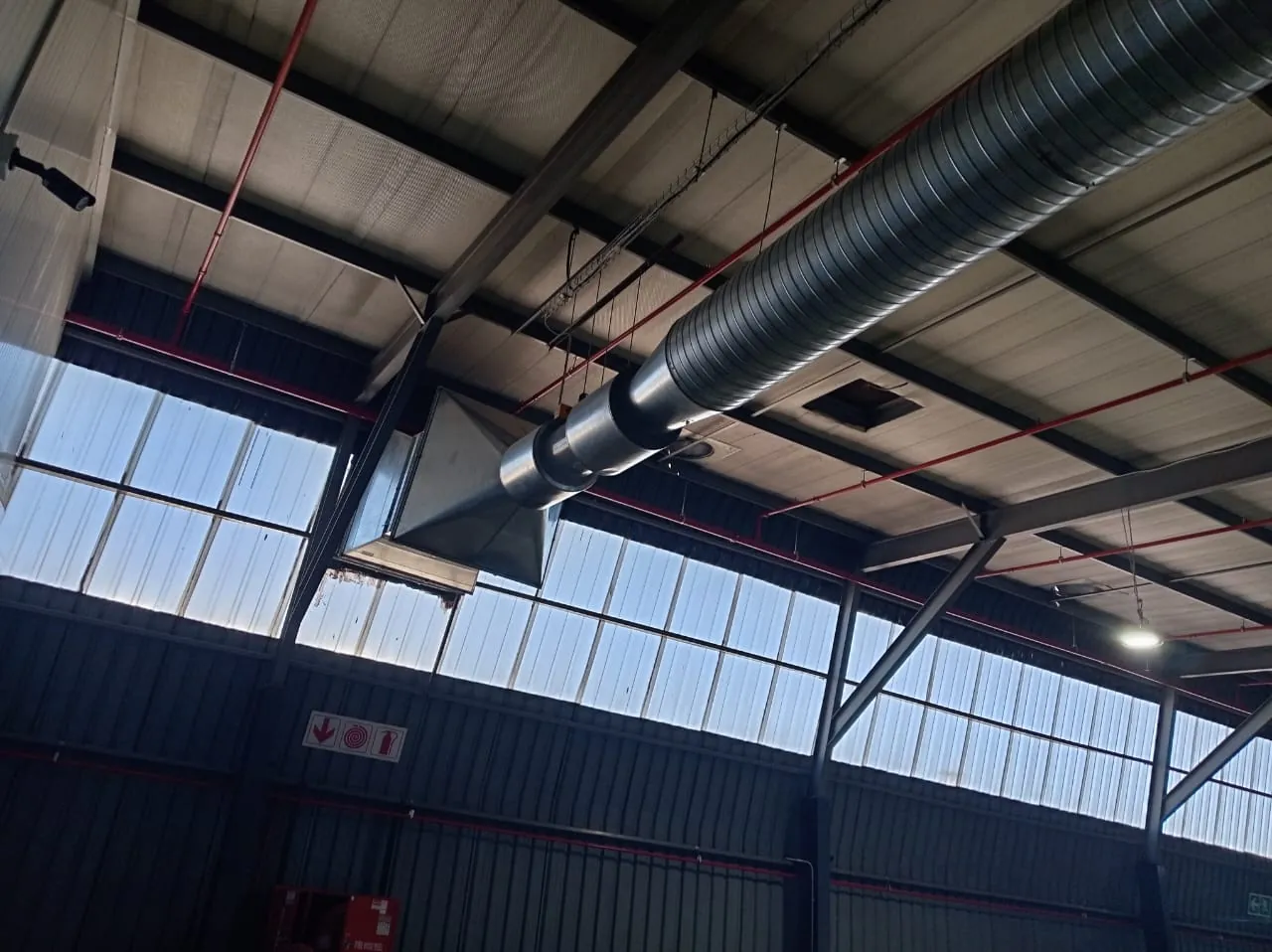
Capture at conveying and transfer points
Grain elevators, conveyors and receiving pits can release dust where material falls, changes direction or is transferred into storage. We identify these locations and how the system operates during peak deliveries. A collector attached at an arbitrary point will not necessarily control emissions along the whole process line.
Collector and ducting layout
Duct positioning must consider access to conveyors, inspection points and existing structures. Filter cleaning arrangements and hopper discharge should be compatible with grain dust properties and throughput. Poorly maintained ducts or blocked dust outlets can create a cycle of loss of suction and dust accumulation.
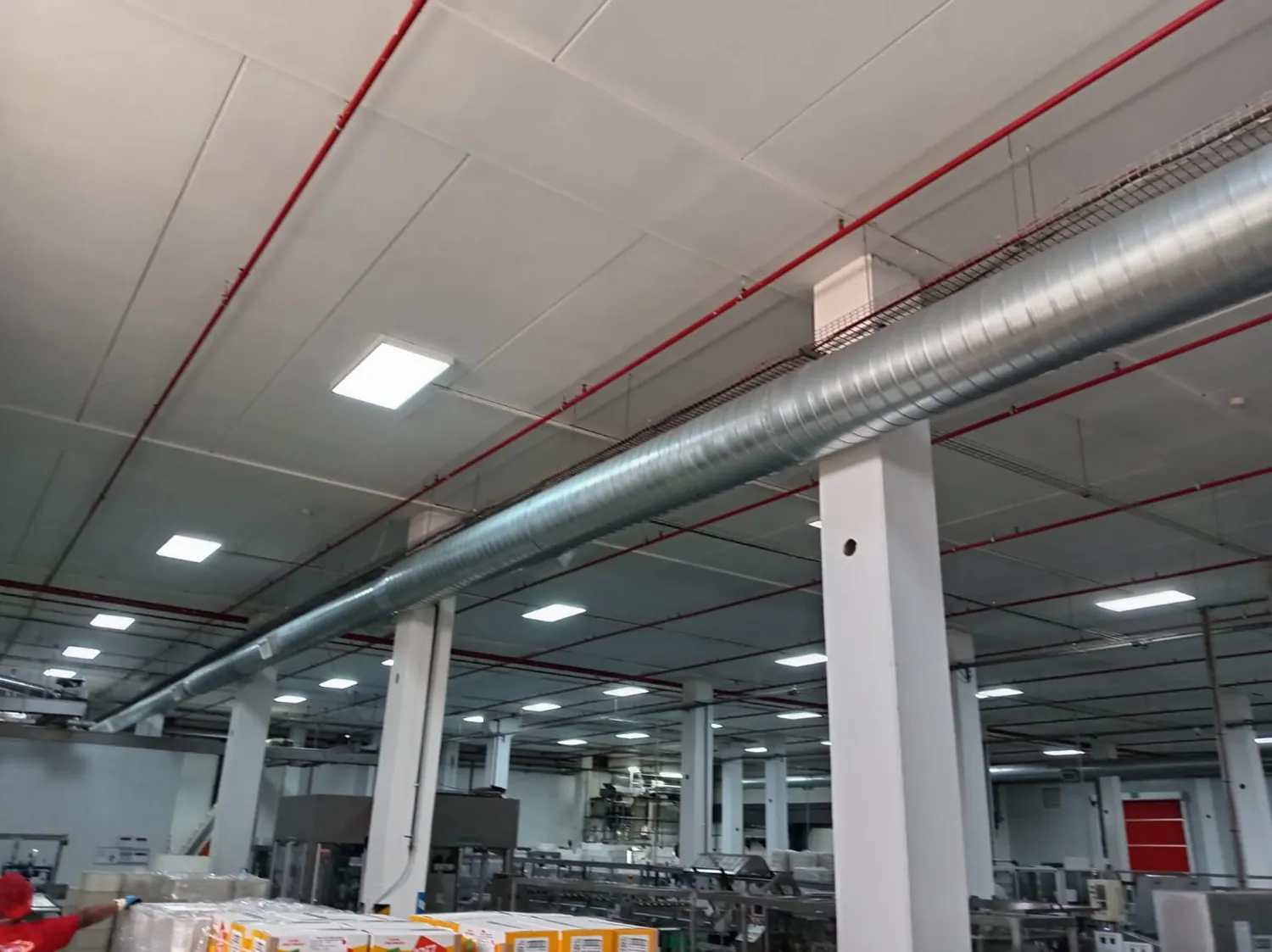
Grain-dust explosion risk
Grain dust can be combustible and facilities may have stringent explosion-safety requirements. A suitable system must be specified through a competent hazardous-dust risk assessment, including isolation and relief or suppression where necessary. No general-purpose fabricated collector should be described as safe by default for grain handling.
Request a site-based quotation
Equipment and operating considerations
Grain dust is released during unloading, conveyor transfer and storage handling, with emissions changing as product moves. We consider enclosure at the transfer point and accessible pickup positions before placing a filter housing. Fine organic dust can be combustible, and specialist hazard assessment is essential. We also review contamination control, moisture and how captured dust is discharged. A grain-handling quotation should identify the product, transfer arrangement, operating rate and available drawings rather than relying only on the size of the building.
Speak to our industrial projects team
Request an industrial extraction assessment
Technical decisions that affect the result
Grain handling releases dust at transfer points, conveyors, bucket elevators and unloading areas. Capturing emissions near these locations can be more useful than trying to clear a building after the dust is airborne. We review transfer geometry, intermittent peak loading and how material is discharged from the collector so that collected fines do not obstruct equipment.
Grain dust can be combustible, and the appropriate specialist fire and explosion risk assessment must precede system selection or alteration. Provide the grains handled, transfer rates, equipment arrangement and current extraction drawings. A collector must also allow safe cleanout and inspection without creating further spillage near conveyors or walkways.
Operating requirements and practical checks
Grain transfer points can experience brief high-concentration dust releases when a conveyor starts, stops or changes load. We would seek the operating sequence rather than relying on a low-load inspection. Enclosures and pickups should leave access for clearing blockages and maintaining the conveying machinery. A safe proposal needs clear boundaries between mechanical fabrication and the competent hazard analysis that determines protection provisions for potentially explosive dust clouds.
Production staff should also describe how and where material is spilled during transfer, as this can reveal pickup positions that are ineffective during peak throughput.