
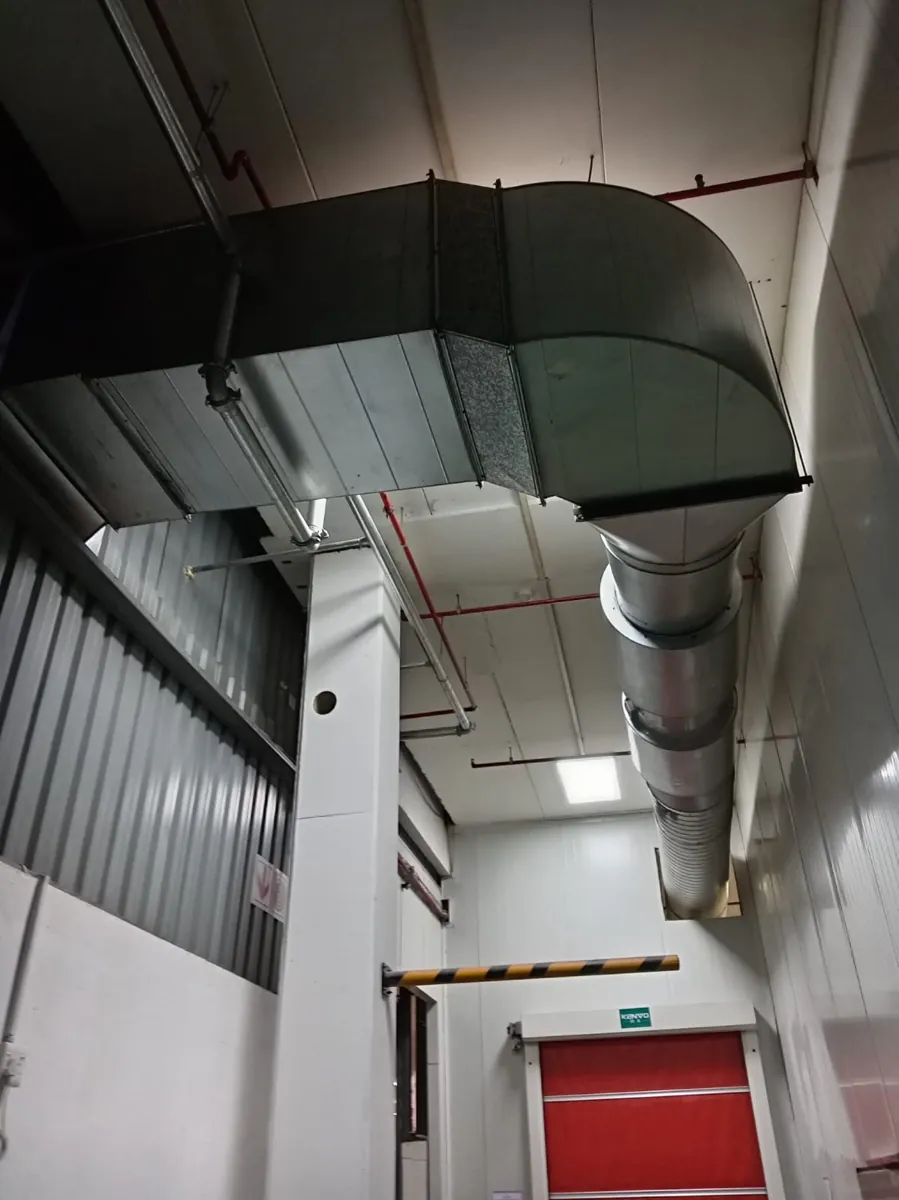
Equipment requirements and operating conditions
An extraction hood works at the point where contamination is generated. A poorly positioned hood may leave dust or fumes drifting across a workstation even when a powerful fan is installed. We fabricate suitable capture arrangements as part of wider extraction projects, guided by the machine layout and the tasks people perform around it.
How we scope the work
We investigate where emissions arise, how operators load material, which guarding must remain accessible and where a capture opening can be placed. Capture performance depends on geometry, source movement and surrounding air conditions. A large hood mounted far away is not automatically more effective than a properly positioned local arrangement.
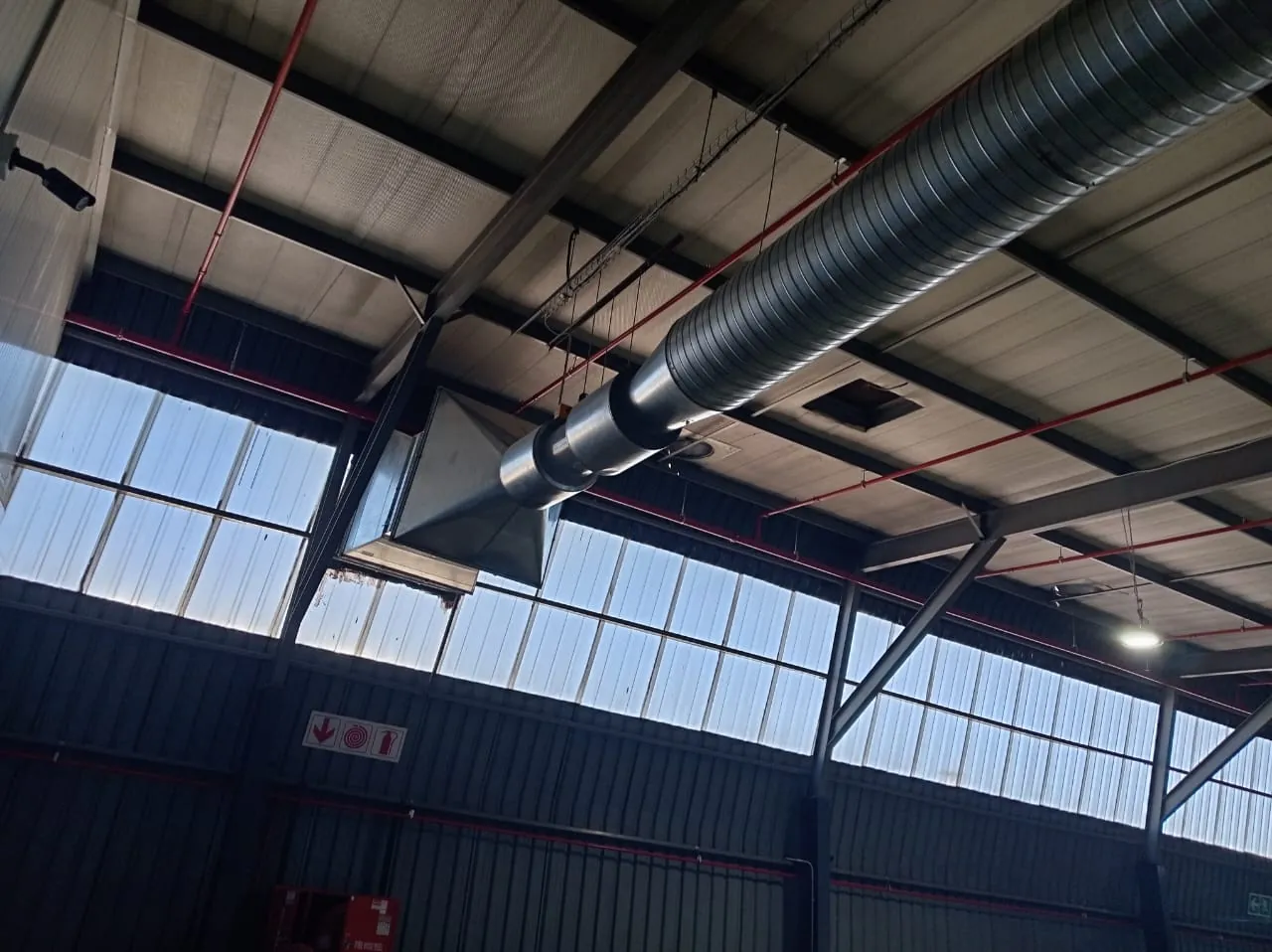
Manufacturing, installation or service approach
Manufacturing work may involve hoods, collars, transition pieces and connection points that integrate with the duct network. The supporting structure must suit the operating space and safe access. For existing systems we can review poorly fitting or damaged hoods before considering whether a different fan or duct route is actually required.
Technical safeguards and limitations
Applications involving welding fume, hot vapour, combustible dust or chemical emissions require suitable material selection and hazard assessment. Hood design must also respect machine safety and not obstruct guards, emergency controls or required working access. Capture suitability should be verified against project requirements.
What to provide for a quotation
Send images of the workstation in normal operating configuration, material processed, machine dimensions, operator position and any available drawings. Short descriptions of when emissions occur are particularly useful for determining whether a fixed enclosure, local hood or another method should be assessed.
Discuss the scope with our technical team
Request a project quotation
Capturing emissions at the source
Extraction hood geometry depends on how the contaminant leaves the process. A hood that is too far from a cutting or transfer point can demand excessive airflow and still allow dust to escape. We examine material movement, access for operators and the need to preserve visibility and machinery guarding.
Practical fabrication constraints
An effective hood must fit the machine and permit cleaning, tool changes and maintenance. Openings and capture distances should be balanced against the available extraction system capacity. Where sparks, heat or harmful fumes are involved, the design requires appropriate technical assessment and safety controls.
Request a hood fabrication assessment
Share machine photographs from several angles, the process description, available duct connection positions and any existing airflow problems. Include the working space required by operators and the plant shutdown window for installation.
Equipment and operating considerations
A fabricated extraction hood needs to intercept the dust or fume where it is released. Excessive distance from the process can make a larger fan ineffective, while poorly arranged enclosure openings allow contaminant escape. We consider operator access, feeding and unloading movements and how the hood connects to ducting without obstructing production. For sparks, hot gases or hazardous dust, the design must address appropriate safety controls. A useful fabrication brief includes process photos, working dimensions and movement envelopes.