When your operation needs a properly scoped solution
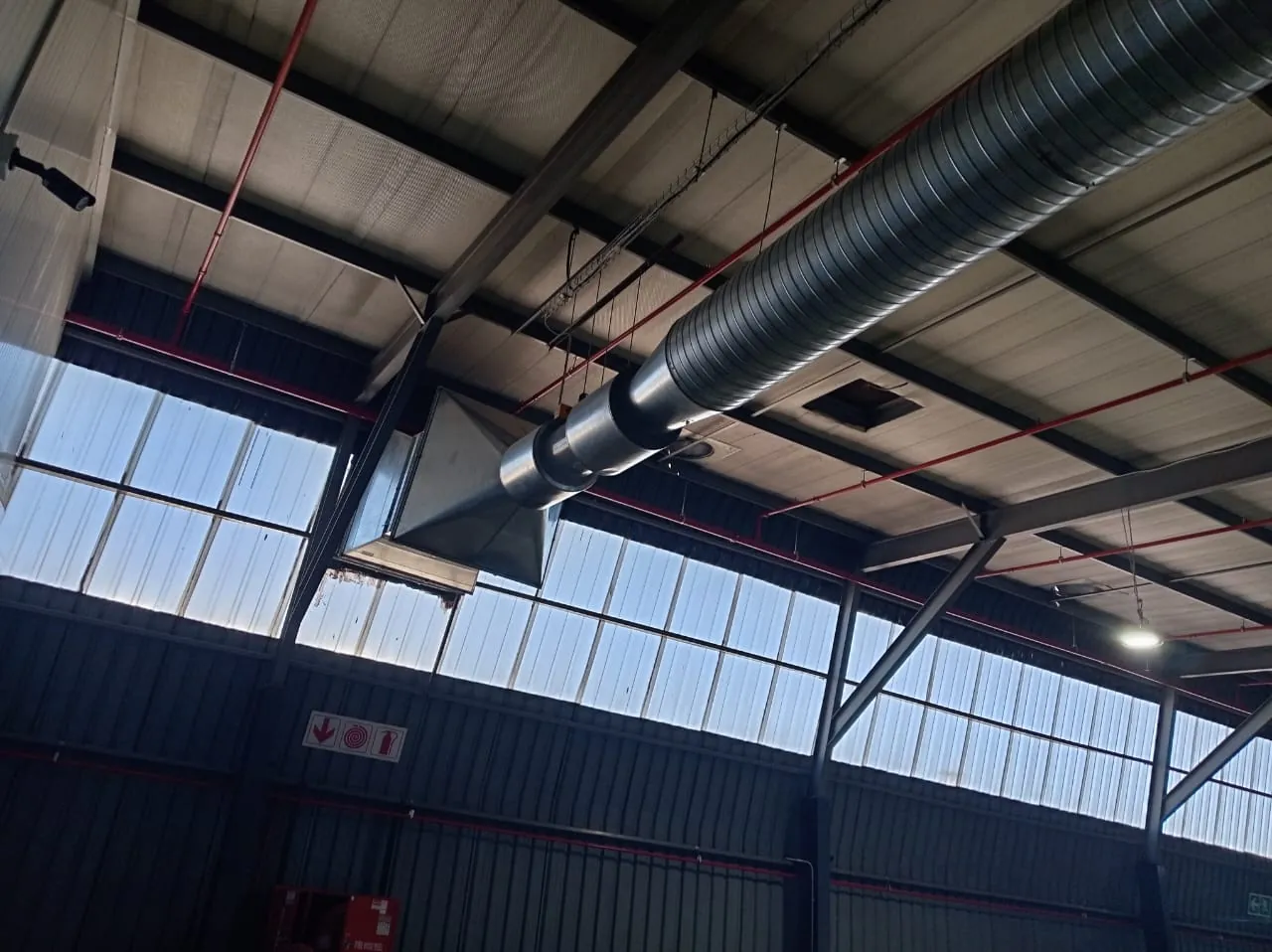
Industrial ductwork connects extraction at the machine to the fan and filtration equipment. Poorly routed or leaking duct runs can waste fan capacity and allow dust to settle where it should remain suspended for collection. We install extraction ducting to suit the process, facility layout and required access around production equipment.
What we review on site
At the planning stage we identify each pick-up point, machine movement, suspended services, structural constraints and possible collector location. Duct diameters and branch configuration should reflect the intended duty, not simply the dimensions of available material. For dust systems, material properties affect decisions about velocities, bends and cleaning access.
How we approach the work
Our scope can cover duct fabrication or procurement as specified, supports, suspended runs, branch connections and integration with fans and collectors. We coordinate installation around high-bay access, overhead work and production restrictions. Changes to an existing system are assessed for their effect on other extraction branches before installation.
Technical suitability and safe operation
Overhead ducting requires sound support and safe installation planning. A strong-looking run is not proof that the extraction system operates correctly. Where performance verification is required, the testing scope must be agreed for the project.
Information that helps us prepare your quotation
Provide a rough equipment layout, ceiling or roof heights, number of extraction points, material being handled and any existing system drawings. Facility photographs help us identify practical routing options.
Ductwork as part of system performance
Extraction ducting must convey material at a suitable velocity while avoiding unnecessary pressure loss. Branch geometry, bend radius, transition pieces and access points all influence how reliably a collector performs. Simply installing the shortest possible route can create blockages or make future maintenance impossible.
Fabrication and installation details
We assess mounting positions, supports, working clearance, penetrations and machinery access before fabricating or positioning sections. The material being extracted affects the choice of ductwork and connection details. Where abrasive dust or grease is involved, suitable cleaning and inspection access needs attention.
What helps us quote ductwork
Provide route sketches, approximate dimensions, ceiling heights, machine positions, access restrictions and existing fan or collector information. Let us know whether the ductwork serves dust, fumes, heat or kitchen exhaust, since the service requirements differ.
Access for future maintenance
Ducting above production lines can be difficult to reach later. We discuss inspection positions and the likely need for cleaning or branch adjustment before finalising routing.
Equipment and operating considerations
Industrial extraction ducts connect capture points to fans and collectors, so poor routing can undermine even well-selected machinery. We examine branch transitions, elbows, material transport and future cleaning access before confirming dimensions. A duct carrying abrasive particles needs different construction choices from one moving ordinary ventilation air. We also consider how sections will be lifted and supported above operating equipment. Site measurements, existing fan information and the proposed pickup positions should be settled before fabrication.