
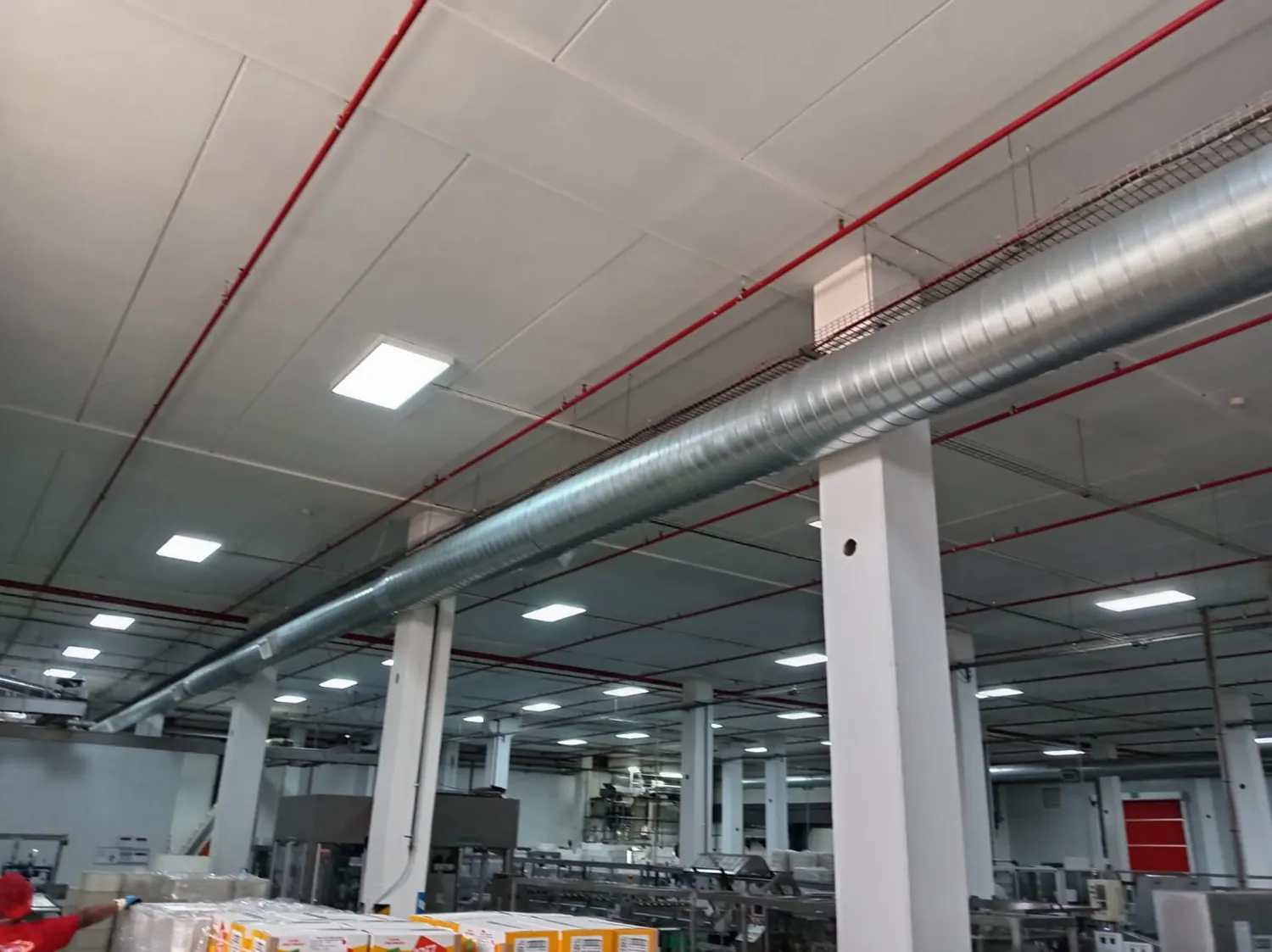
Extraction and cooling influence one another
A factory with strong dust or fume extraction can draw substantial air out of the building. Replacement air has to enter somewhere, and uncontrolled entry can affect temperatures, pressure and the performance of air-conditioning. We discuss HVAC and extraction together when factory modifications change the building’s airflow balance.
Pressure and air pathways
Excessive negative pressure may interfere with doors, process hoods or fresh-air systems. Unplanned outdoor-air entry can increase the cooling load, while poorly located supply outlets can disturb contaminant capture. The practical design question is how air should enter, travel through and leave the facility under real operating conditions.
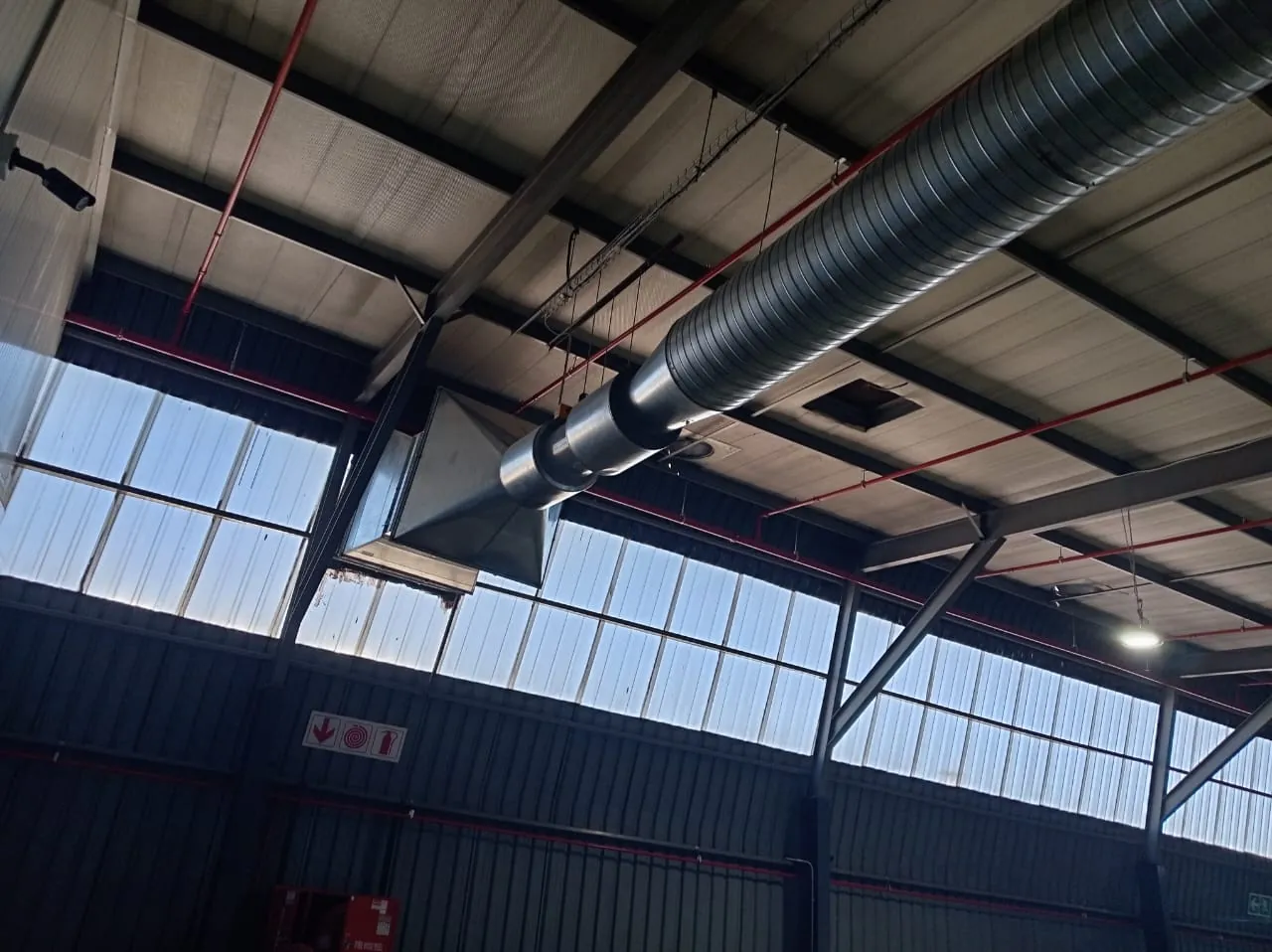
Interface between disciplines
Industrial extraction, make-up air, filtration and space cooling can involve different equipment and controls. We examine which parts of the project need coordinated assessment rather than assuming a standalone fan or air conditioner will solve the entire issue. Hazardous airborne substances need specialist risk assessment and suitable source capture.
Retrofitting occupied factories
New partitions, process machinery or collector upgrades can change existing air movement. We discuss fan operation, existing duct routes, roof penetrations, electrical availability and downtime restrictions before committing to changes. Where calculations or compliance assessments are required, qualified engineering input must be included.
What will help the assessment
Provide the facility layout, processes producing heat or dust, current extract fans, existing air-conditioning equipment and complaints such as hot areas or strong drafts. Photos of roof penetrations and machinery positions are useful for initial planning.
Equipment and operating considerations
Industrial HVAC and extraction systems can interfere when air removed from a plant is not replaced appropriately. Excessive building depressurization may make doors difficult to open or reduce performance at exhaust hoods. We consider makeup air, heat load and where conditioned air should enter relative to contaminant sources. Controls should prevent one system from undermining the other during changing production schedules. Our scope discussions separate source capture, general ventilation and cooling so their interfaces can be evaluated deliberately.
Discuss your project with our team
Request an HVAC project assessment
Practical ventilation choices for the building
A factory may need source extraction for fumes and dust, general ventilation for heat and HVAC for occupied offices or temperature-sensitive processes. These systems should not fight each other: excessive exhaust can alter building pressure and draw conditioned air into the wrong zone. We review their operating schedules and air replacement arrangements together.
An integration enquiry should identify the areas served by existing plant, control sequences and any unexplained pressure or temperature changes. Project scope can include duct alterations, fan work and HVAC interface coordination, but specialist safety or controls approvals must be separately identified where applicable. Successful handover should confirm performance with major systems operating as intended.