
When your operation needs a properly scoped solution
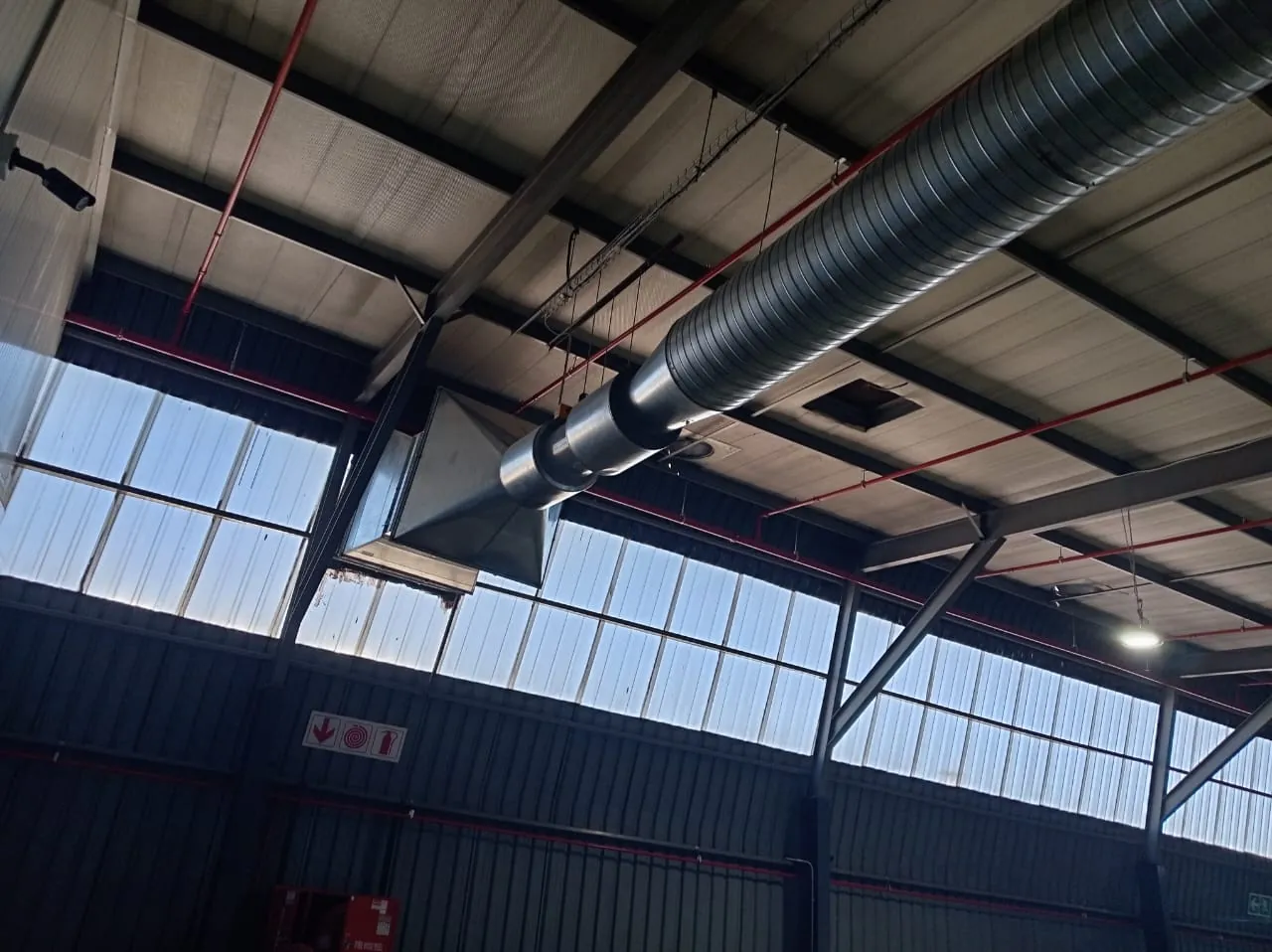
A factory extractor fan has to move air through a real system of openings, hoods, ducts and discharge points. Selecting a fan without accounting for resistance can leave an apparently powerful unit delivering disappointing extraction. We install industrial fans as part of practical ventilation and dust-control arrangements for operating facilities.
What we review on site
We consider what the fan is meant to remove—general heat, process fumes, airborne dust or stale air—and where replacement air can enter the building. Available mounting space, duct resistance, noise, roof or wall penetrations and maintenance access influence the fan arrangement. For a process extraction system, the required duty should be developed from the application rather than guessed from building size.
How we approach the work
The installation scope may involve a new fan, mounting connections, duct changes, mechanical checks and coordination with the site electrical contractor. Where fans are being replaced, we evaluate whether the existing duct route and connection size remain suitable. Commissioning requirements are agreed according to the equipment and project specification.
Technical suitability and safe operation
Fans serving hazardous atmospheres, contaminated airstreams or high-temperature processes require specialist equipment selection and safety review. We will not represent an ordinary ventilation fan as suitable for those duties without evidence.
Information that helps us prepare your quotation
Tell us the building or process type, extraction concern, existing fan details if any, duct route, operating schedule and site location. Photographs of mounting points and available roof or wall access help us plan a visit.
Selecting the fan for the network
A high nominal airflow figure does not guarantee performance once duct resistance, filters, bends and exhaust conditions are introduced. Fan selection should account for system pressure, duty, temperature and the material in the airstream. We assess the intended operating arrangement before finalizing the installation approach.
Mounting and site conditions
Support structure, vibration isolation, access for future bearing or motor work, weather protection and safe discharge location all influence the installation. Connections should accommodate maintenance without unnecessary dismantling. Where electrical controls or speed variation are involved, competent electrical design and installation are required.
Installation quotation inputs
Provide the application, duct route, existing fan details, process operating hours, mounting position and access arrangements. For fan replacements, send the old unit nameplate and describe how its performance has changed.
The air has to come from somewhere
Extracting air from a building without adequate replacement air can affect performance and create unwanted pressure differences. We include inlet paths in the early ventilation discussion.
Equipment and operating considerations
An industrial fan installation must match airflow and static-pressure duty with the duct system it serves. We consider inlet and discharge conditions, mounting loads, vibration isolation, electrical supply and how personnel will access the unit for future servicing. A correctly sized motor cannot compensate for an unsuitable wheel or restrictive downstream ductwork. We ask for layout drawings, duty data and the material or fumes being moved. Final orientation and supports must be agreed before equipment is positioned.