
The project requirement
When a standard collector cannot fit the process duty or available plant space, our in-house fabrication team can develop a collector casing and related metalwork around agreed project requirements. The starting point is the dust and process information, not the outside dimensions of a cabinet.
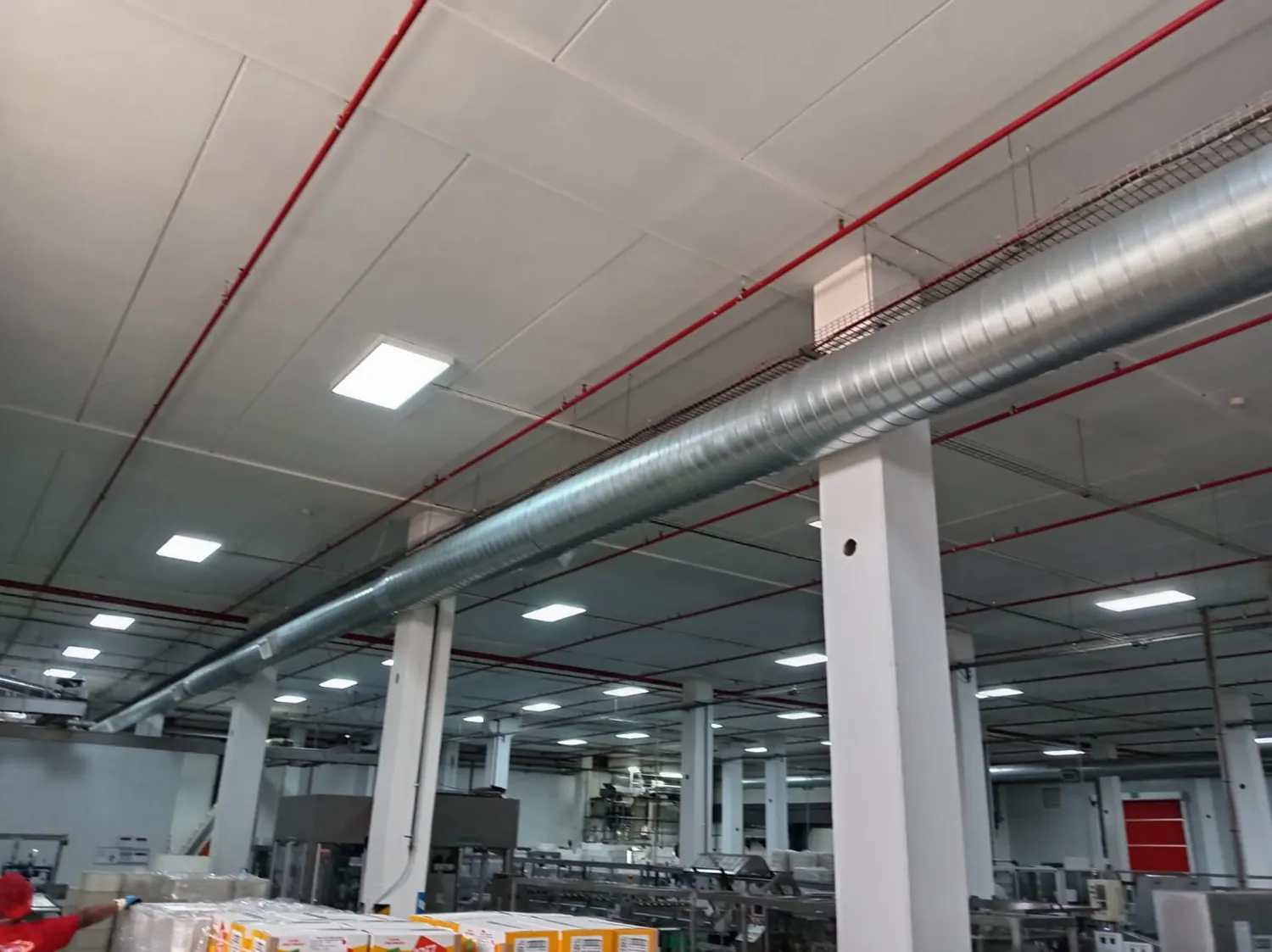
Factory retrofit projects often have tight access around conveyors, mezzanines and existing services. A collector that fits on a layout may still be difficult to maintain if filter withdrawal, hopper discharge and access door swing are overlooked. We discuss both operational footprint and the area needed for safe inspection.
Assessment and technical decisions
Before fabrication, we establish the number of capture points, available drawings, anticipated dust loading and the intended discharge arrangement. The fan duty and filter selection must be developed together: enlarging the casing alone does not correct poor transport velocity in the ducts or an undersized fan.
Manufacturing, repair and installation considerations
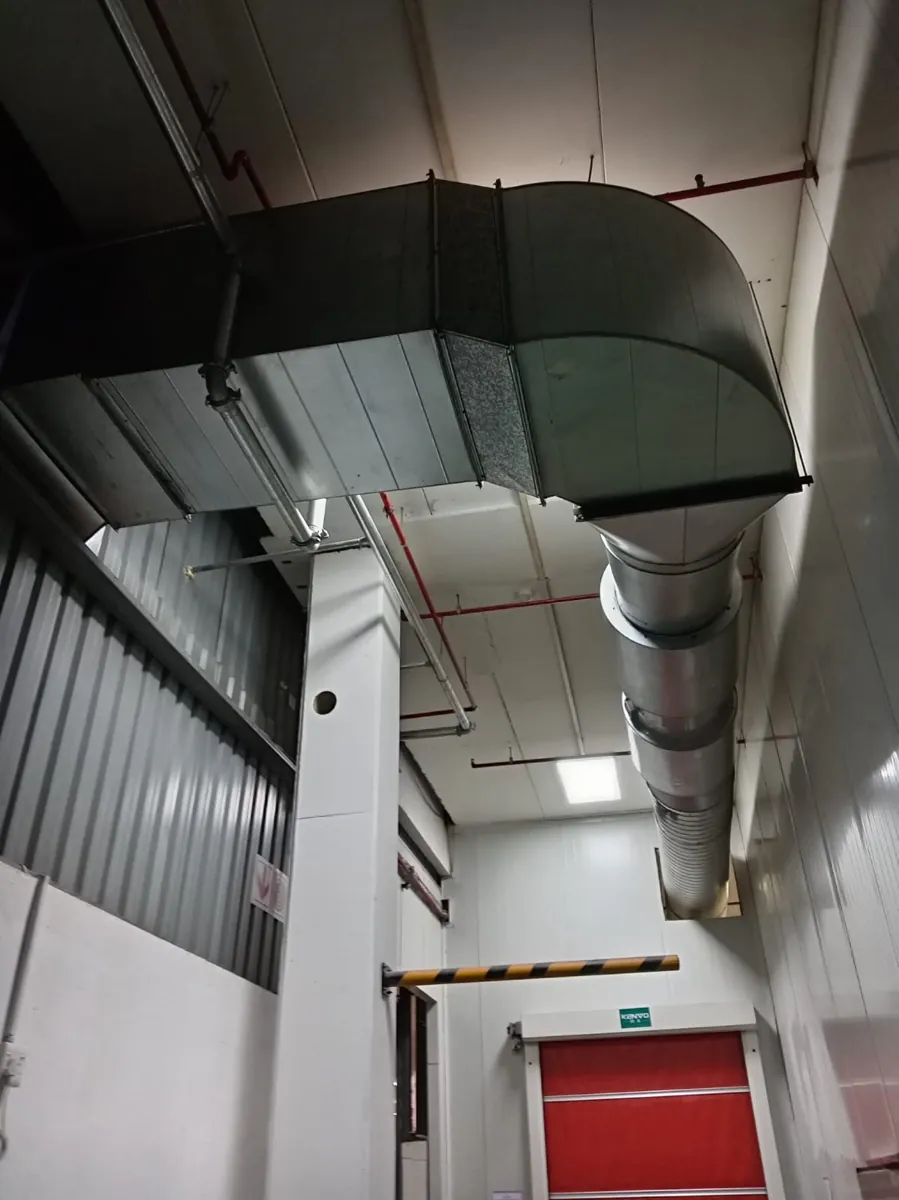
The fabrication scope can address casing sections, stiffeners, doors, access panels, supports, inlet arrangements and interfaces for fan and duct connections. Where an existing collector is being replaced, we compare connection locations, maintenance clearances and constraints on lifting the equipment into position.
Safety and system suitability
Combustible, toxic or high-temperature dust may require a specialist hazard assessment and engineered protection measures. We do not represent an unassessed general-purpose collector as suitable for hazardous service.
Information needed for a quotation
Please send the site layout, dimensions at the intended position, dust and process description, the number of simultaneous extraction points, operating hours and any existing air-volume or pressure figures. Include the desired delivery and installation scope so we can separate fabrication, transport, electrical interfaces and commissioning.
Long-term performance and handover
Future servicing is easier when technicians can access filters, hoppers and seals without dismantling adjoining equipment. We discuss inspection access and replaceable components at the same stage as the mechanical design.
Manufacturing scope and design inputs
For made-to-order collectors, the starting point is the process rather than a catalogue footprint. Useful inputs include the generating machines, quantity and character of the dust, expected operating schedule, available floor space and how the collected material will be discharged. These details affect the arrangement of the housing, hoppers, access doors, duct connections and fan selection.
A fabrication enquiry should distinguish the collector shell from the wider system: fans, duct branches, extraction hoods, filtration controls, platforms and electrical integration may be separate elements of the scope. This makes it easier for your purchasing team to compare proposals on what is actually included.
Material hazards require special attention. Combustible dust, hot particles or potentially explosive atmospheres need a project-specific hazard assessment and appropriately selected protective measures. We would not treat a general-purpose collector as automatically suitable for these duties.
Related services
Explore Industrial Dust Collector Manufacturing & Installation →
Equipment and operating considerations
Custom fabrication is valuable where a standard collector cannot fit the available area or serve the required process connection. We discuss inlet position, filter access, discharge clearance, lifting points and the route for removing collected dust before cutting metal. Collector size must follow the agreed airflow and material duty, not simply available space. Changes in dust characteristics, combustion risk or future production capacity can affect the specification. Drawings and approvals should be settled before manufacture to avoid modifying finished equipment on site.