
Equipment requirements and operating conditions
Cyclones separate entrained particulate from an airstream through rotational motion and can be useful as part of a dust-handling arrangement. We discuss in-house fabrication of cyclone separator bodies, inlet and outlet connections, supports and discharge arrangements around the intended process. A cyclone is not a substitute for fine filtration where the application calls for it.
How we scope the work
Particle size distribution, density, material abrasiveness, airflow, pressure loss and disposal route are central to the selection conversation. A poorly sized cyclone can impose substantial resistance while leaving unwanted fines in the exhaust. The relationship between the cyclone, fan and any downstream filter needs to be considered as one operating system.
Manufacturing, installation or service approach
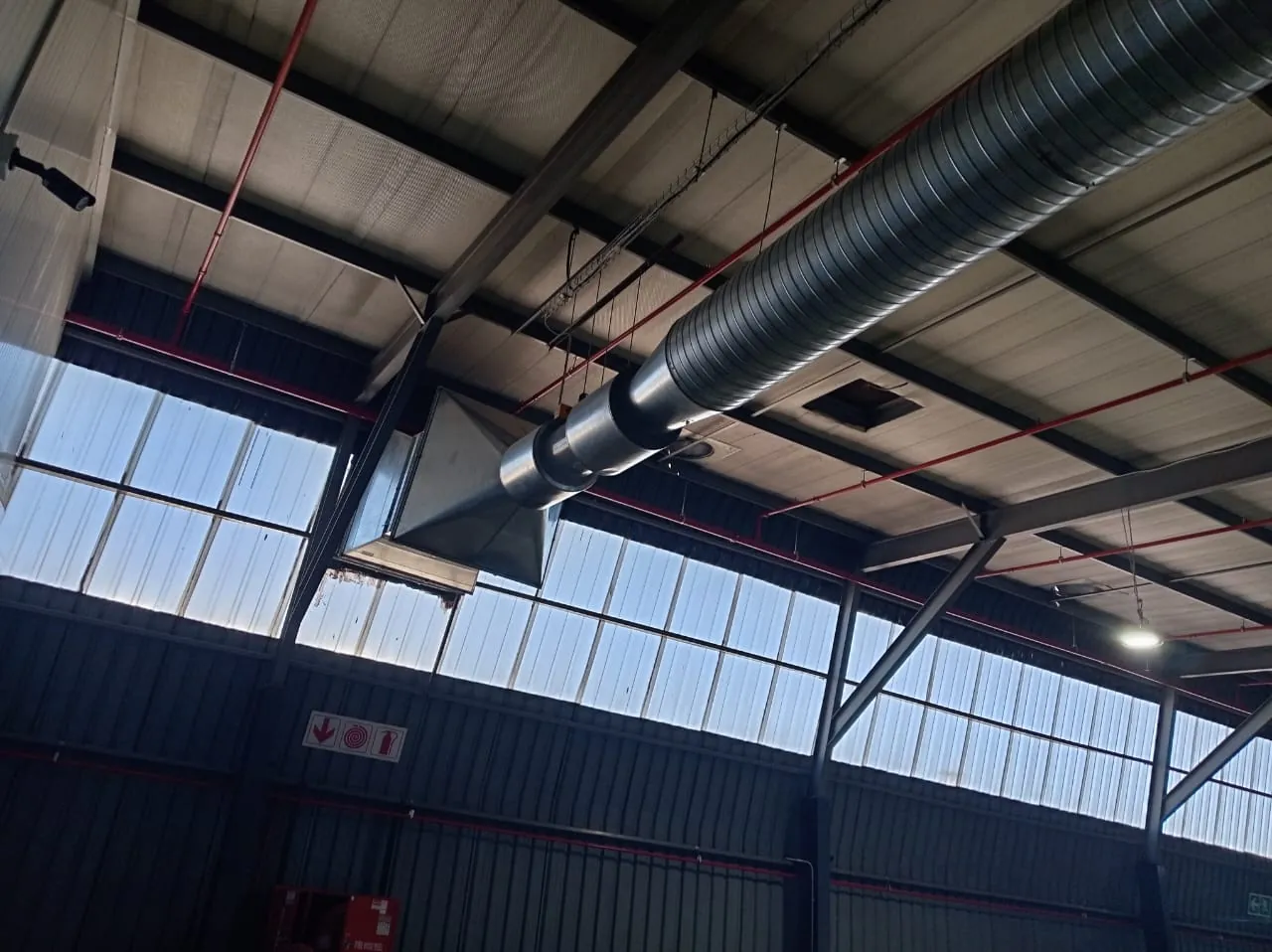
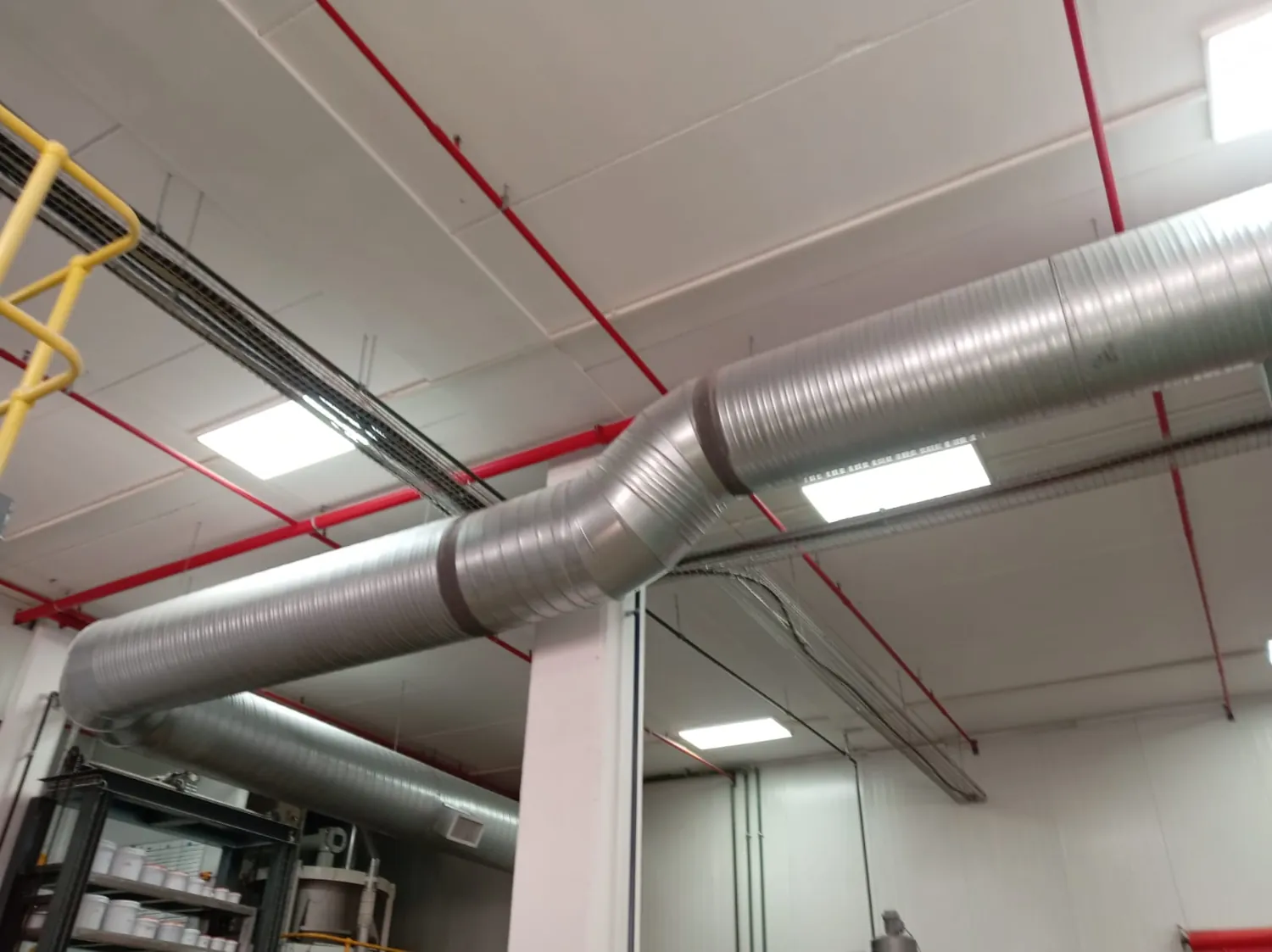
For retrofit work, we examine available headroom, inlet direction, discharge clearance and how the cyclone will tie into existing ducting. Hoppers, rotary valves or other discharge equipment need to suit the material and process. Where the cyclone acts as a pre-separator for a baghouse, the operating sequence and cleaning access also deserve attention.
Technical safeguards and limitations
Hot, combustible, corrosive or otherwise hazardous dust changes the engineering requirements. We will not describe a cyclone as providing a guaranteed removal efficiency without process details and an agreed design duty. Inspection and wear allowances are also important for abrasive material streams.
What to provide for a quotation
Provide details of material handled, available airflow data, current duct connections, required outlet arrangement and photographs of the proposed position. We can review whether a cyclone is a sensible part of the requested system and identify the measurements needed before a fabrication quotation.
Discuss the scope with our technical team
Request a project quotation
Selecting cyclone separation
Cyclones rely on airflow and particle inertia to separate suitable material; they are not a universal replacement for fine-particle filtration. We discuss the expected particle size distribution, volume of material and whether a secondary filter stage is required. An undersized or poorly matched cyclone may increase pressure losses without achieving the required separation.
Inlet, body and discharge considerations
Inlet geometry, cone arrangement, wear areas and discharge sealing affect performance. High material loading or abrasive particulate can demand more attention to wear resistance and maintenance access. A cyclone also needs a sensible layout for downstream filtration or safe discharge, rather than treating the body as a standalone piece of equipment.
What to include in your request
Tell us the process and material being handled, dust collection objective, likely throughput, installation height and intended dust-discharge arrangement. Sketches and site photographs help us assess access, support structure and the connections to existing extraction equipment.
Equipment and operating considerations
A cyclone separates particulate through swirling airflow; it does not automatically provide fine-dust filtration. Its performance depends on particle size, density, air volume and pressure loss. We discuss whether the cyclone is intended as the final separation stage for a coarse material or as a pre-separator protecting downstream filters. Inlet geometry, wear surfaces and discharge sealing matter during fabrication. Abrasive material and high dust loading may justify additional attention to lining, access and safe emptying of collected solids.